
Why is the combustible gas alarm set point not the lower gas explosion limit?
Publication Date:2024/12/02 I believe everyone knows that the set point of the combustible gas alarm refers to the preset combustible gas concentration threshold of the alarm. When the detected combustible gas concentration reaches or exceeds this threshold, the combustible gas alarm will issue an alarm to remind the operator to pay attention and take corresponding safety measures. However, we may wonder why the set point of the combustible gas alarm is not directly set to the lower explosive limit (LEL) of the gas, but to a percentage of the lower explosive limit. Do you know why the Combustible gas alarm set point is not the lower limit of gas explosion? The following is a brief introduction by yiyuntian electronics:
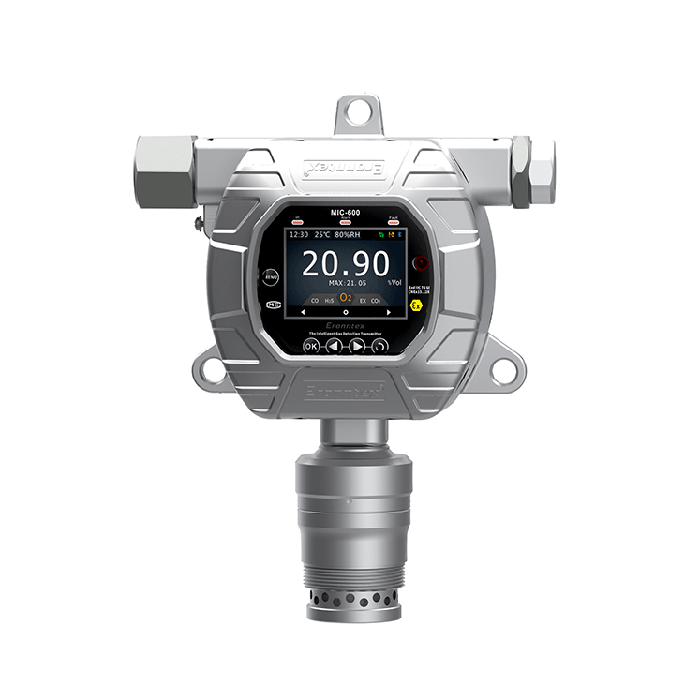
the set point of the combustible gas alarm is not directly set at the lower explosion limit (LEL) of the gas, instead, it is set within a certain percentage of the lower explosive limit, which is mainly based on the following reasons:
1. security advance
Avoid immediate danger: if the set point of the combustible gas alarm is directly set to the lower explosion limit, the combustible gas alarm will only trigger when the combustible gas concentration reaches the lower explosion limit.However, in practical applications, we hope to have enough warning time before the danger occurs so that preventive measures can be taken, such as closing gas valves and opening ventilation equipment. Therefore, setting the alarm point within a certain percentage of the lower explosive limit (such as 1% to 25% LEL) can issue an alarm when the gas concentration has not reached the lower explosive limit, thus ensuring sufficient time to respond.
Reduce false alarm rate: Due to environmental factors and sensor accuracy limitations, if the set point of the combustible gas alarm is too close to the lower explosive limit, it may trigger false alarms due to small concentration fluctuations or sensor errors. By setting a reasonable range of alarm points, the possibility of such false alarms can be reduced and the accuracy and reliability of combustible gas alarms can be improved.
2. the flexibility of setting alarm points
Meet different application scenarios: In different application scenarios, the requirements for security warnings may be Different. For example, in a domestic environment, a higher level of safety warning may be required so that measures can be taken quickly to protect the safety of the family in the event of a gas leak; in an industrial environment, a more sophisticated alarm point setting may be required to adapt to different production processes and process requirements. By setting the alarm point within a certain percentage range of the lower explosive limit, it can be adjusted and optimized according to the needs of actual application scenarios.
3. Technology Implementation and Standard Specifications
standard specification: according to relevant national standards, the alarm point setting range of combustible gas alarm is usually stipulated between the low limit of 1% LEL ~ 25% LEL and the high limit of 50% LEL. Such a setting range can not only ensure the advance of safety warning, but also adapt to the needs of different gases and application scenarios.
In summary, we can see that the set point of the combustible gas alarm is not directly Set at the lower explosive limit of the gas, but set within a certain percentage of the lower explosive limit, the main purpose is to ensure the advance of safety warning, the flexibility of alarm point setting, and compliance with technical implementation and standard specifications. Such a setting method not only conforms to the relevant technical standards and specifications, but also improves the accuracy and reliability of the combustible gas alarm while ensuring safety.Therefore, when designing and using combustible gas alarms, we should fully understand the principle and significance of their set points to ensure that they can effectively provide security for our lives and work.
Related information
-
How to Calibrate a Portable four-in-one Gas Detectors?
Portable four-in-one gas detectors are core protective equipment in the industrial safety field. However, sensors can experience z...
2026-09-18 -
What are the application scenarios for portable four-in-one gas detectors?
Portable four-in-one gas detectors typically monitor oxygen (O₂), flammable gas (LEL), carbon monoxide (CO), and hydrogen sulfide...
2026-09-16 -
Portable four-in-one Gas Detectors User Manual
The portable four-in-one gas detectors is a core piece of personal protective equipment (PPE) for ensuring the safety of personnel...
2026-09-14 -

Calibration Specifications for Ammonia gas Detectors
Calibration of ammonia gas detectors is a core step in ensuring their measurement accuracy and alarm reliability. However, ammonia...
2026-09-11 -
What is the appropriate installation height for an ammonia gas detectors?
Ammonia (NH₃) has a relative density of only 0.59, much lighter than air. This means that in the event of a leak, the gas will qu...
2026-09-09
 info@eranntexgas.com sale1@eranntexgas.com


 15914124845