
What is the setting range of low report and high report of combustible gas alarm?
Publication Date:2024/12/06 Combustible gas alarm as the 1 kind of important safety equipment, bear the important task of monitoring the concentration of combustible gas in the environment, can send out early warning signal in time before the gas concentration rises to the dangerous threshold. In this process, the setting range of under-report and over-report is very important to ensure the effectiveness and safety of combustible gas alarm. So do you know the setting range of combustible gas alarm ? The following is a brief introduction by yiyuntian electronics:
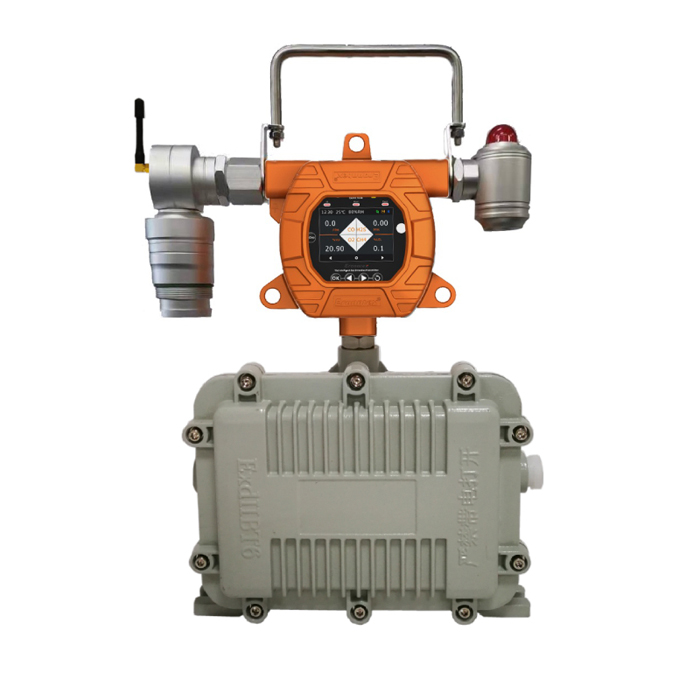
low level of combustible gas alarm highlight setting range, certain standards and codes are usually followed to ensure that the alarm can be issued in time before the concentration of combustible gas reaches dangerous levels.The following is a detailed explanation of the setting range of combustible gas alarm under-report and over-report:
1. underreporting setting range
underreporting (also called alarm) setting of the primary combustible gas alarm the range is generally adjustable between 5% and 40% of the lower explosive limit (LEL). But more commonly, the underreporting is set at 25% LEL, or between 15% LEL and 25% LEL according to national regulations. This set value is intended for early warning. When the concentration of combustible gas is close to but has not yet reached the explosion hazard level, the combustible gas alarm can issue an alarm to remind the operator to take timely measures.
2. overstatement setting range
3. setup basis and considerations
gas types and characteristics: different types of combustible gases have different lower explosion limits and toxicity characteristics. therefore, the setting range of low report and high report of combustible gas alarm needs to be adjusted according to the characteristics of the measured gas.
application scenarios and requirements: the setting range of combustible gas alarm should also consider the requirements of application scenarios, such as industrial environment, commercial environment or home environment. Different application scenarios may have different requirements for security warning, so it needs to be adjusted and optimized according to the actual situation.
Calibration and maintenance: The combustible gas alarm should be calibrated and maintained regularly to ensure its accuracy and reliability.At the same time, the operator should be familiar with the use of combustible gas alarms and the meaning of alarm signals, so that they can quickly take correct countermeasures when receiving an alarm.
To sum up, we can see that the setting range of low report and high report of combustible gas alarm is determined according to relevant national standards and specifications, the characteristics of the measured gas and the requirements of application scenarios. By reasonably setting the alarm value of the combustible gas alarm, it can be ensured that the alarm is issued in time before the combustible gas concentration reaches the dangerous level, thereby effectively preventing potential safety risks.
Related information
-
How to Calibrate a Portable four-in-one Gas Detectors?
Portable four-in-one gas detectors are core protective equipment in the industrial safety field. However, sensors can experience z...
2026-09-18 -
What are the application scenarios for portable four-in-one gas detectors?
Portable four-in-one gas detectors typically monitor oxygen (O₂), flammable gas (LEL), carbon monoxide (CO), and hydrogen sulfide...
2026-09-16 -
Portable four-in-one Gas Detectors User Manual
The portable four-in-one gas detectors is a core piece of personal protective equipment (PPE) for ensuring the safety of personnel...
2026-09-14 -

Calibration Specifications for Ammonia gas Detectors
Calibration of ammonia gas detectors is a core step in ensuring their measurement accuracy and alarm reliability. However, ammonia...
2026-09-11 -
What is the appropriate installation height for an ammonia gas detectors?
Ammonia (NH₃) has a relative density of only 0.59, much lighter than air. This means that in the event of a leak, the gas will qu...
2026-09-09
 info@eranntexgas.com sale1@eranntexgas.com


 15914124845