
Gas detector shows negative pressure, what should I do?
Publication Date:2024/12/11 In the field of gas detection and monitoring, gas detector, as a key safety equipment, plays a vital role. It can monitor the gas concentration in the environment in real time to ensure the safety of personnel and the smooth progress of the production process. However, when the gas detector shows negative pressure, it is often a warning signal that can not be ignored, which means that the detection instrument may encounter some abnormal situation in the measurement process. Then you know that gas detector shows negative pressure, what should you do? The following is an introduction by yi yun tian electronic editor:
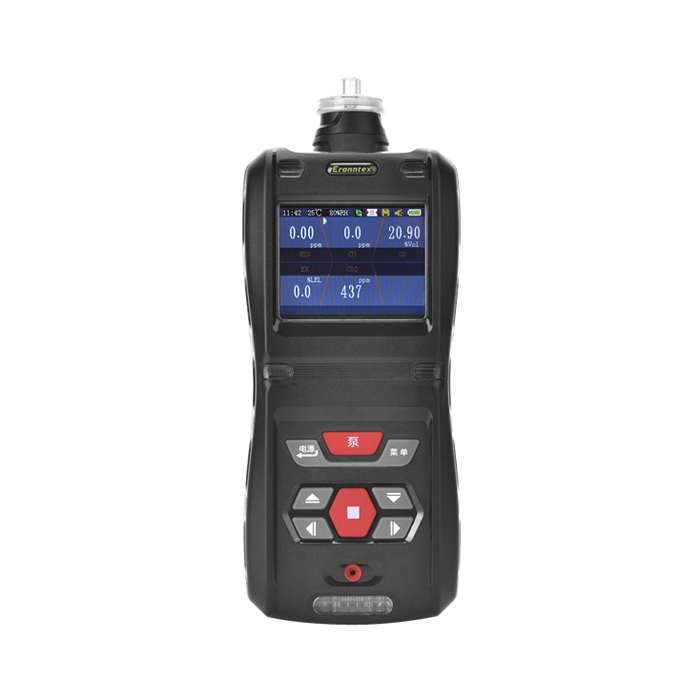
When the gas detector displays negative pressure, check and deal with it according to the following steps:
1. instrument and environmental troubleshooting
(1) Check the instrument settings:
Ensure that the test parameters of the gas detector are set correctly, and there are no problems caused by misoperation or wrong settings.
(2) Check the ambient temperature:
Gas detectors generally operate within a specific temperature range. If the ambient temperature is too low, it may affect the detection result of the sensor and cause the negative pressure display. At this time, the gas detector can be placed in a normal temperature environment for a period of time, and then detected after it is recovered.
(3) Check the gas concentration:
In a polluted atmosphere, if the gas detector is zeroed and placed in clean air, it may cause negative readings due to the pollutant concentration at zero. At this time, it is necessary to confirm whether the zeroing of the gas detector is accurate and re-zeroing in an appropriate environment.
2. Troubleshooting Sensors
The sensor has a limited service life. Long-term use or harsh environmental conditions may cause the sensor of the gas detector to age, resulting in a decrease in sensitivity, resulting in negative pressure readings.At this time, a new sensor needs to be replaced.
(2) Sensor cross interference:
Some gas sensors may cause cross interference with other gases, resulting in negative pressure readings. For example, a sulfur dioxide sensor may produce a negative cross interference with nitrogen dioxide. At this point, it is necessary to understand and avoid using the same gas detector sensor in a gas environment where there is mutual negative cross interference.
3. inspection test procedures and methods
In the air tightness test, if the internal volume of the test circuit changes slightly due to the air pressure change, or the plastic parts are deformed due to the pressure, it may cause negative pressure readings.At this time, it is necessary to select an airtight gas detector with a small loop space and ensure that the test loop is designed reasonably.
(2) Test time settings:
If the time setting of the test phase is too short, it may cause the test pressure of the gas detector to be unstable, resulting in negative pressure readings. At this time, the holding time can be appropriately increased to ensure the stability of the test pressure.
4. Calibration and Repair
strong> (1) Calibrate the instrument:
Regularly calibrating the gas detector can reduce measurement errors and avoid negative pressure readings. The target point shall be calibrated with a standard gas.
(2) Contact the manufacturer or professional:
If none of the above methods can solve the problem, it is recommended to contact the manufacturer of the gas detector or professional maintenance personnel for maintenance.
To sum up, we can see that when the gas detector displays negative pressure, it needs to be checked and processed from many aspects such as instrument and environmental factors, sensor problems, test process and method, calibration and maintenance.By checking one by one and taking corresponding solutions, we can effectively solve the problem of negative pressure display, so as to better ensure the accuracy and reliability of the gas detector.
Related information
-
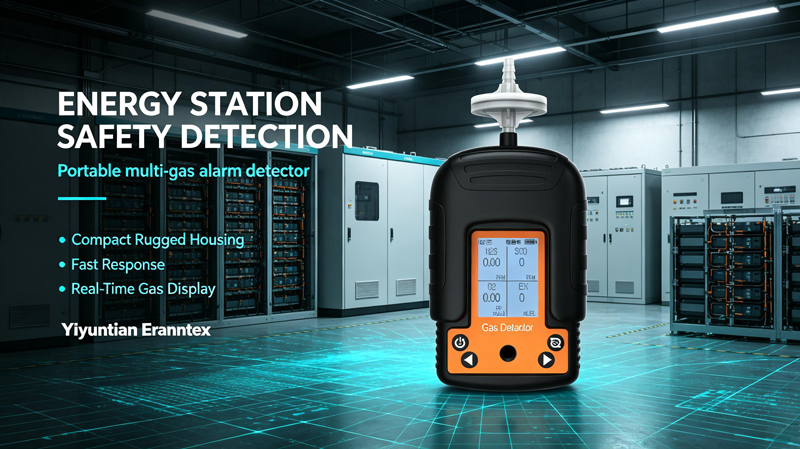
How to Calibrate a Portable four-in-one Gas Detectors?
Portable four-in-one gas detectors are core protective equipment in the industrial safety field. However, sensors can experience z...
2026-09-18 -
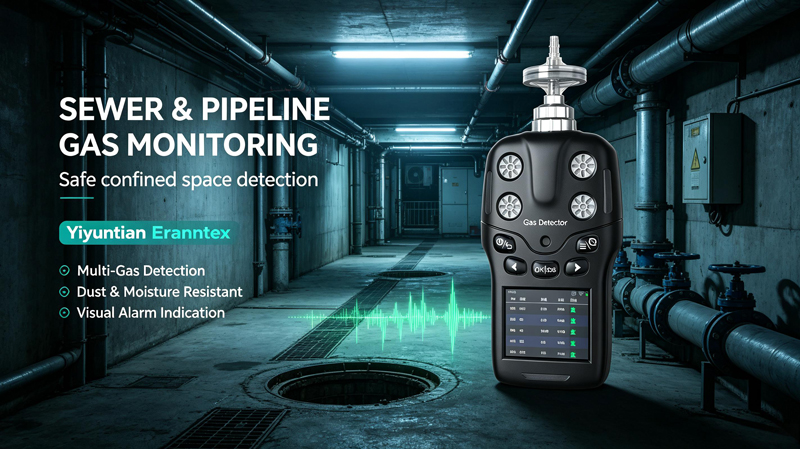
What are the application scenarios for portable four-in-one gas detectors?
Portable four-in-one gas detectors typically monitor oxygen (O₂), flammable gas (LEL), carbon monoxide (CO), and hydrogen sulfide...
2026-09-16 -
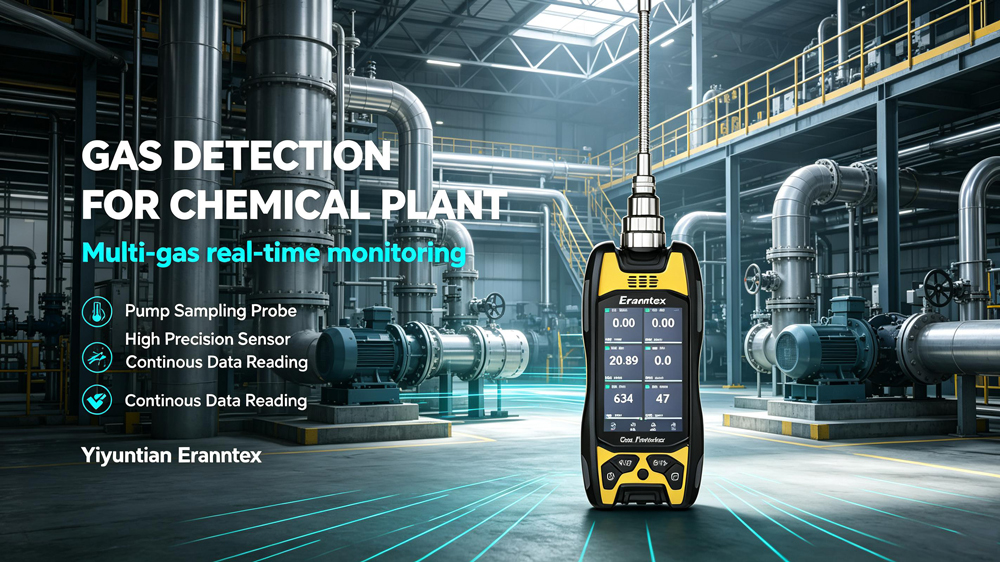
Portable four-in-one Gas Detectors User Manual
The portable four-in-one gas detectors is a core piece of personal protective equipment (PPE) for ensuring the safety of personnel...
2026-09-14 -

Calibration Specifications for Ammonia gas Detectors
Calibration of ammonia gas detectors is a core step in ensuring their measurement accuracy and alarm reliability. However, ammonia...
2026-09-11 -
What is the appropriate installation height for an ammonia gas detectors?
Ammonia (NH₃) has a relative density of only 0.59, much lighter than air. This means that in the event of a leak, the gas will qu...
2026-09-09
 info@eranntexgas.com sale1@eranntexgas.com


 15914124845