
What are the key factors that affect the accuracy of the oxygen detector?
Publication Date:2024/12/30 As an indispensable key equipment in environmental monitoring, the accuracy of the oxygen detector is directly related to the protection of personnel life safety, the improvement of production efficiency and the reliability of equipment operation. However, in the course of use, there may be a variety of potential factors that challenge its accuracy, which in turn affects the overall performance of the oxygen detector. So do you know what are the key factors that affect the accuracy of the oxygen detector ? The following is a brief introduction by yiyuntian electronics:
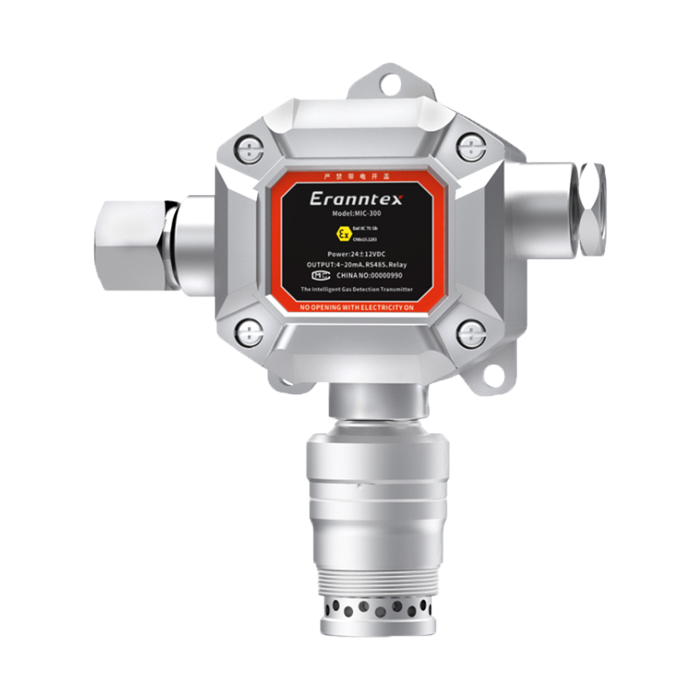
The key factors that affect the accuracy of the oxygen detector mainly include the following points:
1. Instrument Design and Manufacturing
Sensor performance:
Possible causes: The sensor is the core component of the oxygen detector, and its quality, performance and stability directly affect the accuracy of the measurement results.
Solution: High-quality sensors have higher sensitivity, faster response speed and better Stability, thereby improving the accuracy of the oxygen detector measurement.
Instrument structure:
Possible reasons: whether the structural design of the oxygen detector is reasonable, such as the simplification and cleanliness of the gas path system, and whether the pollution and interference in the gas path are effectively eliminated, will affect the measurement results.
Solution: High-quality design should ensure that the gas path system of the oxygen detector is simple, the connection dead angle is small, and the use of equipment that is easy to cause pollution is avoided.
2. Calibration and Calibration
Possible causes: Unscheduled calibration may cause the measurement error of the oxygen detector to increase gradually, thus affecting the accuracy of the measurement results.
Solution: Regularly calibrating the oxygen detector is an important step to ensure its accuracy. The calibration frequency should be determined according to the frequency of use of the instrument and environmental conditions.
Calibration Method:
Possible causes: The choice and correctness of the calibration method will also affect the accuracy of the oxygen detector measurement to a certain extent.
Solution: The oxygen detector should adopt the standard gas sample comparison calibration method, and ensure that the error of each point in the calibration process is within the allowable range.
Temperature and Humidity:
Possible causes: Under extreme or unstable ambient temperature and humidity conditions, the performance of the sensor may be affected, resulting in inaccurate measurement data of the oxygen detector.
Solution: Use the oxygen detector under stable temperature and humidity conditions and avoid exposing it to extreme environments.
Electromagnetic Interference:
Possible causes: electromagnetic interference may affect the normal operation of the oxygen detector, resulting in fluctuations or instability of the measurement data.
Solution: Avoid placing the oxygen detector close to the source of electromagnetic interference.
4. Operations and Maintenance
Possible causes: Correct operation is essential to ensure the accuracy of the oxygen detector.
Solution: Follow the manufacturer's instructions to avoid incorrect operation that may cause damage to the oxygen detector or inaccurate measurement.
Maintenance:
Possible causes: Regular cleaning and maintenance of the oxygen detector, including cleaning the sensor, checking the connection points, etc., can extend the life of the instrument and maintain its accuracy.
Solution: When reusing the oxygen detector, make sure that there is no air leakage when connecting the sampling pipeline, and carefully blow the air leakage clean.
Pipe material and surface roughness:
Possible causes: The humidity and roughness of the pipe material and surface may affect the change of oxygen content in the sample gas.
Solution: The oxygen detector should choose the appropriate pipe material (such as stainless steel pipe) and avoid using pipes that are easy to cause pollution (such as plastic pipe and rubber pipe).
Instrument leakage:
Possible causes: any imprecise connection points, welding points, valves, etc. may cause oxygen in the air to reverse into the pipeline and inside the oxygen detector, thus obtaining the result of high oxygen content.
Solution: Strict leak detection should be carried out before the initial activation of the oxygen detector to ensure that the instrument is tight and does not leak.
In summary, we can see that the key factors that affect the accuracy of the oxygen detector involve the common influence of instrument design and manufacturing, calibration and calibration, environmental factors, operation and maintenance, and many other aspects. Therefore, in order to ensure the accuracy of the measurement results, we need to comprehensively consider these factors and take corresponding measures to optimize the performance of the instrument, so as to improve the accuracy of the oxygen detector through continuous improvement and optimization, and provide a strong guarantee for personnel safety and production efficiency.
Related information
-
How to Calibrate a Portable four-in-one Gas Detectors?
Portable four-in-one gas detectors are core protective equipment in the industrial safety field. However, sensors can experience z...
2026-09-18 -
What are the application scenarios for portable four-in-one gas detectors?
Portable four-in-one gas detectors typically monitor oxygen (O₂), flammable gas (LEL), carbon monoxide (CO), and hydrogen sulfide...
2026-09-16 -
Portable four-in-one Gas Detectors User Manual
The portable four-in-one gas detectors is a core piece of personal protective equipment (PPE) for ensuring the safety of personnel...
2026-09-14 -

Calibration Specifications for Ammonia gas Detectors
Calibration of ammonia gas detectors is a core step in ensuring their measurement accuracy and alarm reliability. However, ammonia...
2026-09-11 -
What is the appropriate installation height for an ammonia gas detectors?
Ammonia (NH₃) has a relative density of only 0.59, much lighter than air. This means that in the event of a leak, the gas will qu...
2026-09-09
 info@eranntexgas.com sale1@eranntexgas.com


 15914124845