
Detection Range of Oxygen Detectors
Publication Date:2026/02/25Oxygen detectors are indispensable tools in industrial safety, confined space operations, medical support, and environmental monitoring. For users, understanding their detection range is not only essential for selecting appropriate equipment but also critical for ensuring personnel safety and compliance. Unlike many other gas detection devices, the objective of oxygen detection is not to identify “toxic concentrations” but to determine whether the oxygen content in an environment falls within the safe breathing range. Consequently, the design logic for their detection range differs from other gases. Below, Yiyuntian Eranntex explains this further.

In most applications, the standard detection range for oxygen detectors is 0% to 25% volume concentration (% vol). This span covers scenarios ranging from complete oxygen deficiency (e.g., nitrogen-purged containers) to oxygen-enriched environments (e.g., medical or welding settings). It is important to note that normal atmospheric oxygen concentration is approximately 20.9% vol. According to definitions by international safety agencies such as OSHA (Occupational Safety and Health Administration) and HSE (Health and Safety Executive), oxygen concentrations below 19.5% are classified as “hypoxic,” while levels above 23.5% are defined as “hyperoxic”—both posing significant safety hazards. Hypoxia can cause dizziness, loss of consciousness, or even suffocation; hyperoxia significantly increases fire and explosion risks as materials become more flammable in high-oxygen conditions.
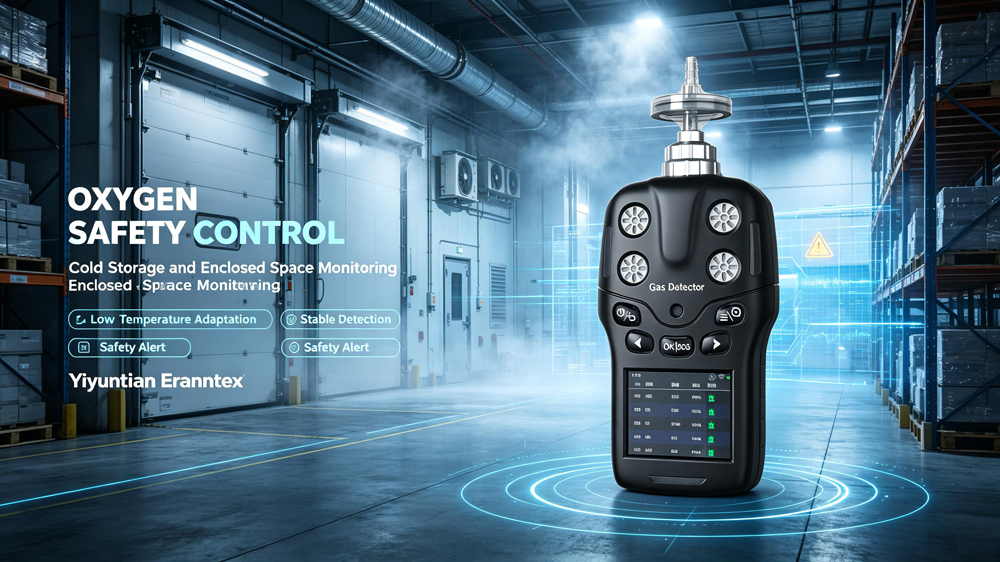
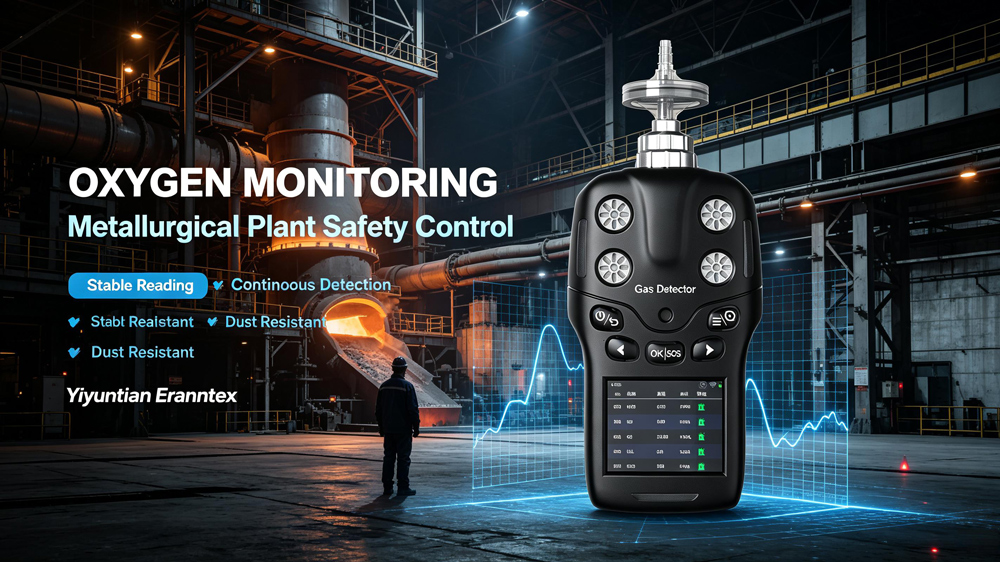
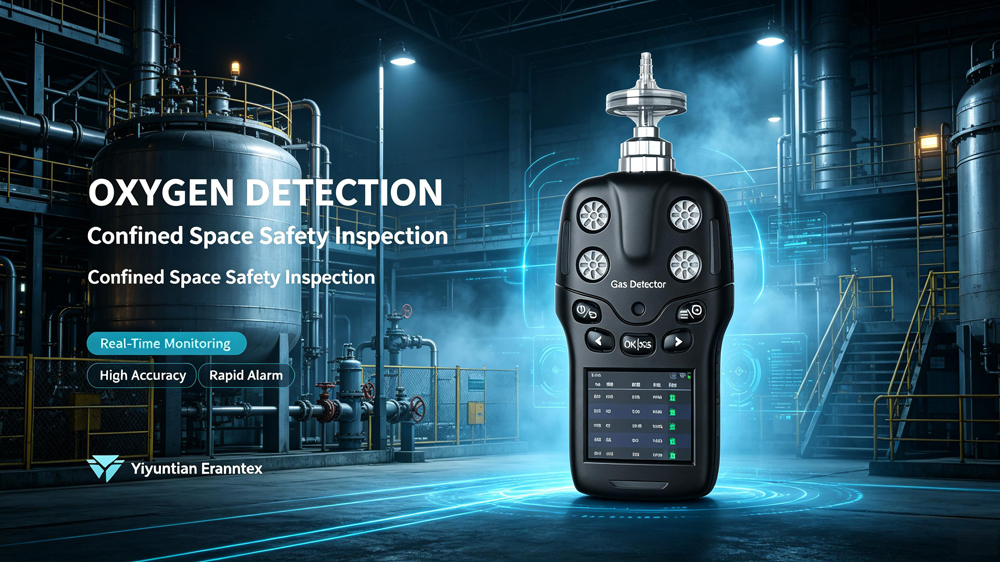
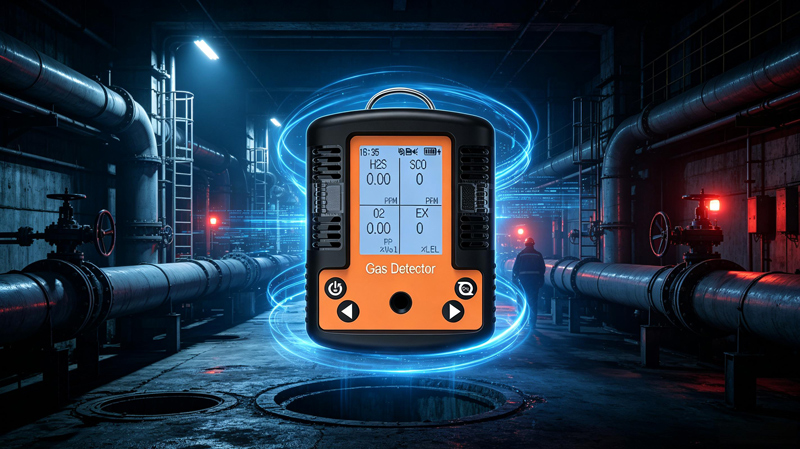
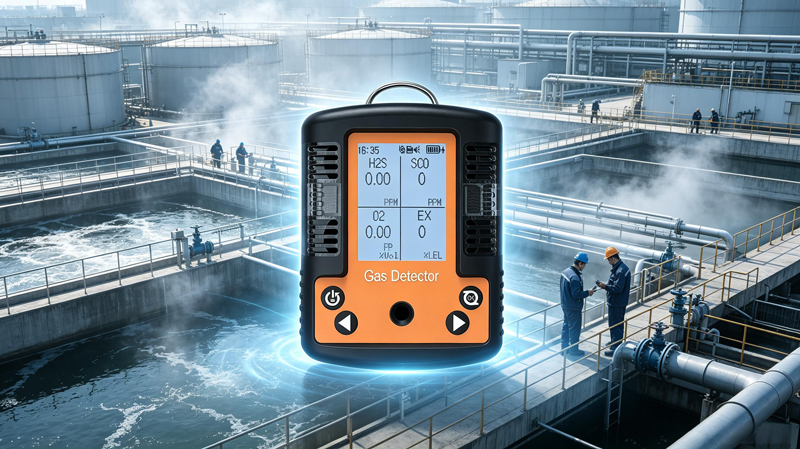
For this reason, professional-grade oxygen detectors typically provide high-precision measurements within this 0–25% range, with typical accuracy reaching ±0.1% or ±0.5% vol, depending on sensor type and device rating. Most portable multi-gas detectors (such as quad detectors) incorporate electrochemical oxygen sensors with an effective operating range of 0–25%, sufficient for industrial safety requirements. However, certain specialized applications—such as diving, aerospace, or high-purity inert gas production—may require broader or narrower measurement ranges. For instance, in high-purity nitrogen systems, users may need trace oxygen detection within 0–1%, necessitating specialized trace oxygen analyzers (e.g., zirconia-based or laser absorption) rather than general-purpose safety detectors.
It is important to note that not all devices labeled as “oxygen detectors” are suitable for safety monitoring. Some low-cost air quality monitors may only provide rough oxygen readings (e.g., 15–25%) and lack ATEX, IECEx, or UL certification, making them unsuitable for hazardous areas. International users should clearly distinguish between “comfort monitoring” and “life-safety-level monitoring” during procurement. Genuine industrial-grade oxygen detectors must comply with relevant safety standards (e.g., EN 60079-29-1, UL 61010) and feature clearly configurable low/high alarm thresholds—typically defaulting to 19.5% for low and 23.5% for high, though adjustable based on site risk assessments.
Furthermore, oxygen sensor performance degrades over time. Electrochemical oxygen sensors typically last 12–24 months, failing even when unused due to natural electrolyte evaporation. Therefore, readings may be severely distorted if the calibration cycle or sensor lifespan is exceeded, even if the device displays “normal.” This underscores why international best practices emphasize: performing a bump test before each use, calibrating every 1–3 months, and regularly replacing sensors.
In summary, oxygen detectors for global users typically operate within a mainstream range of 0% to 25% vol, with the core objective of identifying hazardous conditions below 19.5% or above 23.5%. This range is designed with human physiological limits and industrial safety standards in mind. However, when selecting equipment, users must consider not only the stated measurement range but also accuracy, certifications, sensor type, and intended application scenarios. In life-critical situations, a reliable, certified, and properly maintained oxygen detectors holds far greater value than a cheap device that merely “appears functional.” For overseas professionals, understanding these nuances is the first step toward making informed procurement and operational decisions.
Related information
-
How to Calibrate a Portable four-in-one Gas Detectors?
Portable four-in-one gas detectors are core protective equipment in the industrial safety field. However, sensors can experience z...
2026-09-18 -
What are the application scenarios for portable four-in-one gas detectors?
Portable four-in-one gas detectors typically monitor oxygen (O₂), flammable gas (LEL), carbon monoxide (CO), and hydrogen sulfide...
2026-09-16 -
Portable four-in-one Gas Detectors User Manual
The portable four-in-one gas detectors is a core piece of personal protective equipment (PPE) for ensuring the safety of personnel...
2026-09-14 -

Calibration Specifications for Ammonia gas Detectors
Calibration of ammonia gas detectors is a core step in ensuring their measurement accuracy and alarm reliability. However, ammonia...
2026-09-11 -
What is the appropriate installation height for an ammonia gas detectors?
Ammonia (NH₃) has a relative density of only 0.59, much lighter than air. This means that in the event of a leak, the gas will qu...
2026-09-09
 info@eranntexgas.com sale1@eranntexgas.com


 15914124845