
[Nitrogen Oxide Analyzer] How does a nitrogen oxide analyzer analyze nitrogen oxides?
Publication Date:2022/04/26nitrogen oxides analyzer how to analyze nitrogen oxides? nitric oxide and ozone reaction to produce a unique luminescence, luminous intensity and NO concentration is linearly proportional to, when the electronic excitation of NO2 molecules decay to a lower energy state, will emit infrared light. Specifically: NO + NO3 → NO2 + NO2 + hv.
Nitrogen dioxide (NO2) needs to be converted into NO before it can be measured by chemiluminescence reaction. NO2 is converted to NO by a molybdenum NO2-NO converter heated to about 325°C (optional stainless steel converter heated to 625).
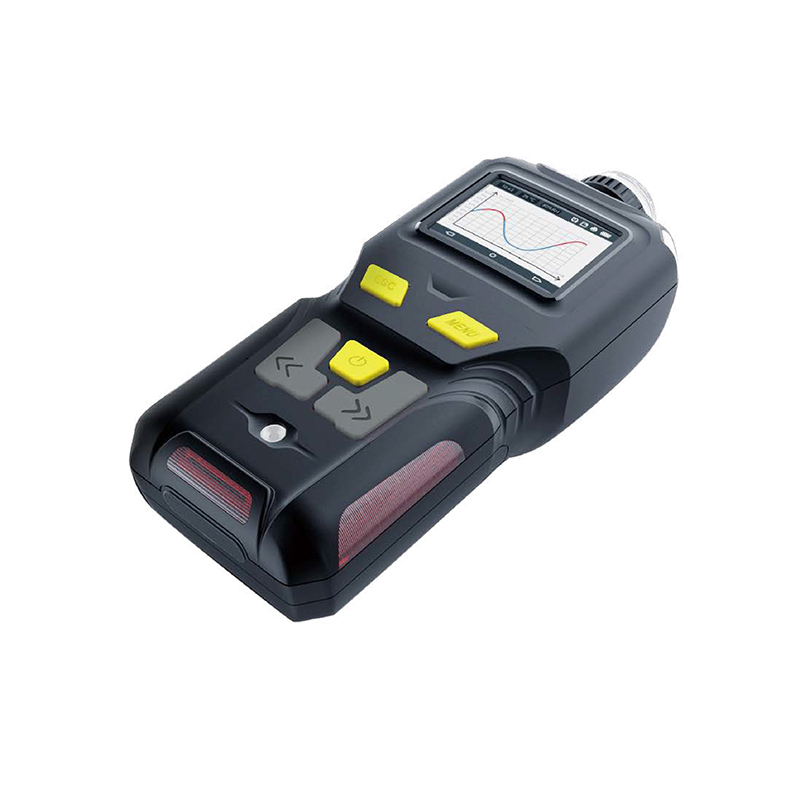
The environmental sample is sampled to stop being drawn into the analyzer. The sample flows through the capillary and then to the mode solenoid. The solenoid valve sample is sent directly to the reaction chamber (NO mode) or through the NO2-NO converter (NOX mode).A flow sensor located in front of the reaction chamber is used to measure the sample flow. Dry air enters the analyzer through the dry air plug, passes through the flow switch, and then passes through the silent discharge ozone generator. An ozone generator is used to generate the ozone required for the chemiluminescent reaction. In the reaction chamber, the ozone reacts with NO in the sample to produce excited NO2 molecules. The luminescence produced in this reaction was detected by a photomultiplier tube (PMT) enclosed in a thermoelectric cooler. From the exhaust reaction chamber, it moves to the pump through the ozone converter, and then exits through the exhaust port. The calculated NO and NOx concentrations in the NO and NOx modes are stored in memory. The concentration difference is used to calculate the concentration of NO2. The 42I analyzer outputs NO, NO2, and NOX concentrations to a front panel display and analog output, and provides this data via a serial or Ethernet interface.
how does a nitrogen oxide analyzer analyze nitrogen oxides? I have already told you that friends who need to know nitrogen oxide analyzer can come to yiyuntian for consultation and understanding. we have professional personnel to answer your questions.
Related information
-
How to Calibrate a Portable four-in-one Gas Detectors?
Portable four-in-one gas detectors are core protective equipment in the industrial safety field. However, sensors can experience z...
2026-09-18 -
What are the application scenarios for portable four-in-one gas detectors?
Portable four-in-one gas detectors typically monitor oxygen (O₂), flammable gas (LEL), carbon monoxide (CO), and hydrogen sulfide...
2026-09-16 -
Portable four-in-one Gas Detectors User Manual
The portable four-in-one gas detectors is a core piece of personal protective equipment (PPE) for ensuring the safety of personnel...
2026-09-14 -

Calibration Specifications for Ammonia gas Detectors
Calibration of ammonia gas detectors is a core step in ensuring their measurement accuracy and alarm reliability. However, ammonia...
2026-09-11 -
What is the appropriate installation height for an ammonia gas detectors?
Ammonia (NH₃) has a relative density of only 0.59, much lighter than air. This means that in the event of a leak, the gas will qu...
2026-09-09
 info@eranntexgas.com sale1@eranntexgas.com


 15914124845