
When the hydrogen detector is adjusted to zero, what should be paid attention?
Publication Date:2024/10/16 In some specific industries and application fields, such as petrochemical, chemical, energy, etc., there are strict requirements for the accuracy and reliability of hydrogen detectors. However, zero adjustment is a key step to ensure the measurement accuracy of the hydrogen detector. Only after accurate zero adjustment of the hydrogen detector can reliable measurement data be provided to help users find and deal with potential safety hazards such as hydrogen leakage in time. So do you know what should be paid attention to when hydrogen detector is set to zero? The following is a brief introduction by yiyuntian electronics:
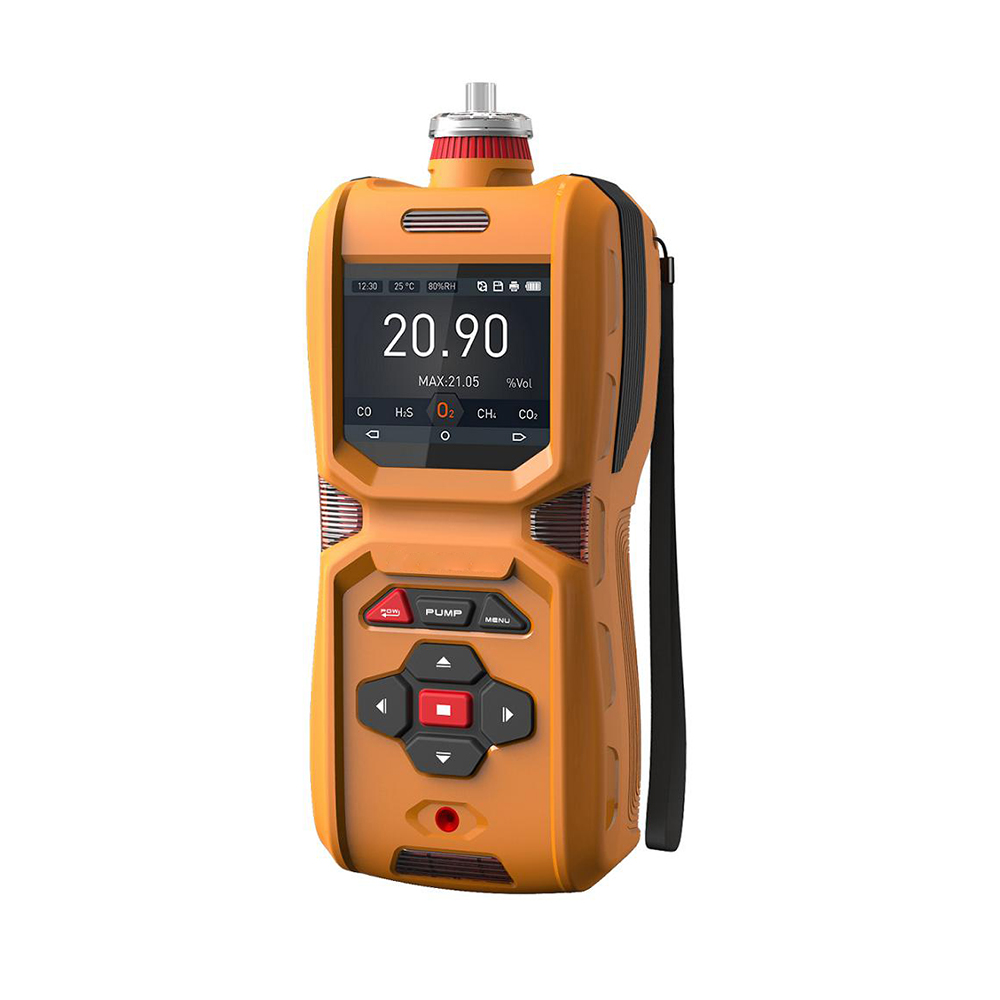
When the hydrogen detector is adjusted, the following aspects should be noted:
Security environment: ensure that the hydrogen detector is in a safe working environment, away from potential hydrogen leakage sources, and avoid hydrogen or other interfering gases in the environment to ensure the accuracy of zero adjustment.
Environmental stability: avoid the influence of wind, airflow or other interference factors on the hydrogen detector, and keep the environment relatively stable.
2. Power and Preheating
The preheating is sufficient: start up according to the requirements of the hydrogen detector instructions, and wait for the instrument to enter the preheating state. The preheating time depends on the hydrogen detector model and the manufacturer's recommendation, and usually ranges from a few minutes to tens of minutes. During the preheating period, the sensor inside the hydrogen detector will gradually stabilize, reducing the influence of external factors on the measurement.
3. Code of Practice
Enter the zeroing mode: Enter the zeroing mode by pressing a specific button or key combination. At this time, the hydrogen detector should display the current gas concentration value.
Purge the sensor: Purge the sensor of the hydrogen detector with clean dry air or nitrogen to remove possible impurities or gas residues. The purging process should be gentle and uniform to avoid additional interference with the sensor.
Set the zero adjustment parameter: find the zero adjustment parameter setting position according to the instruction of the hydrogen detector, and set the zero adjustment parameter correctly. This usually involves adjusting some parameter of the instrument or confirming a specific zeroing value.
fine adjustment and saving: if the initial value of the hydrogen detector is not 0, you need to enter the zero fine adjustment function through the menu, use the addition and subtraction items to adjust the value to 0, and save the settings.
4. Exit and Validation
Test verification: Verify the accuracy and reliability of the instrument by testing hydrogen samples with known concentrations. If the test result is consistent with the expected value, it means that the zero adjustment is successful and the hydrogen detector can be put into normal use.
5. precautions
Regular calibration: In order to ensure the accuracy of the hydrogen detector, it is recommended to calibrate regularly, and the calibration interval is recommended to be controlled within 6 months.
Professional maintenance: Clean and maintain the hydrogen detector regularly, use a clean soft cloth to wipe the probe and housing, and avoid using corrosive cleaning agents. At the same time, check whether the sensor is clean and unclogged, and clean or replace it if necessary.
To sum up, we can see that we need to pay attention to environmental preparation, power supply and preheating, operation specification, exit and verification, and daily maintenance when the hydrogen detector is adjusted.By following these precautions, the accuracy and reliability of the hydrogen detector can be effectively ensured, thereby providing users with accurate gas concentration measurement data.
Related information
-
How to Calibrate a Portable four-in-one Gas Detectors?
Portable four-in-one gas detectors are core protective equipment in the industrial safety field. However, sensors can experience z...
2026-09-18 -
What are the application scenarios for portable four-in-one gas detectors?
Portable four-in-one gas detectors typically monitor oxygen (O₂), flammable gas (LEL), carbon monoxide (CO), and hydrogen sulfide...
2026-09-16 -

Portable four-in-one Gas Detectors User Manual
The portable four-in-one gas detectors is a core piece of personal protective equipment (PPE) for ensuring the safety of personnel...
2026-09-14 -

Calibration Specifications for Ammonia gas Detectors
Calibration of ammonia gas detectors is a core step in ensuring their measurement accuracy and alarm reliability. However, ammonia...
2026-09-11 -
What is the appropriate installation height for an ammonia gas detectors?
Ammonia (NH₃) has a relative density of only 0.59, much lighter than air. This means that in the event of a leak, the gas will qu...
2026-09-09


 info@eranntexgas.com sale1@eranntexgas.com


 15914124845