
How to install hydrogen detector correctly?
Publication Date:2024/12/16 In order to effectively monitor and prevent the various risks that may be caused by hydrogen leakage, the correct installation of hydrogen detectors is one of the key steps to ensure the safety of the industrial environment. Therefore, by installing the hydrogen detector correctly, we can not only quickly detect the potential hydrogen leakage, effectively avoid the occurrence of serious safety accidents such as fire and explosion, but also provide solid support for the safety production of enterprises. So do you know how to properly install Hydrogen Detector ? The following is an introduction by Yiyuntian Electronics:
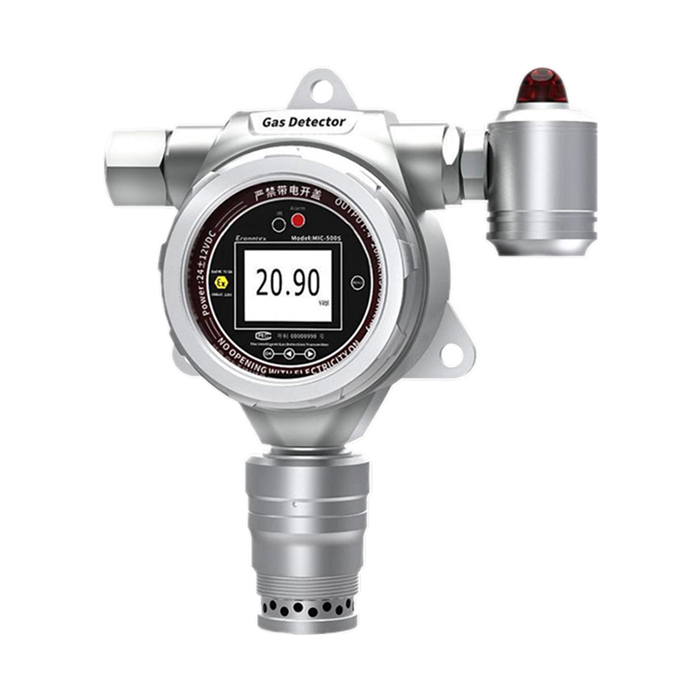
How to correctly install the hydrogen detector:
(1) Equipment inspection:
Ensure that the appearance of the hydrogen detector is intact without damage or deformation.
Check whether the sensor and connecting wire are intact, free from damage or aging.
Check whether the instructions and accessories of the hydrogen detector are complete, including mounting brackets, screws, etc.
(2) Environmental Assessment:
Make a comprehensive assessment of the installation environment of the hydrogen detector to ensure that the installation location is far away from potential interference sources, such as electromagnetic interference, heat and vibration sources.
Choose a location where the gas is easy to diffuse and has no obstructions so that the gas can enter the hydrogen detector smoothly.
Avoid installing the hydrogen detector in places that are hot, humid, exposed to direct sunlight, or susceptible to physical damage.
2. Select Install Location
strong> (1) Select according to the specific gravity of the gas:
Since hydrogen is less dense than air, the hydrogen detector should be installed 0.5 m to 2 m above the leak point.
If you need to detect gases heavier than air, install the hydrogen detector at a distance of 30 to 60cm from the ground, and ensure that the sensor position is downward.
(2) Consider environmental factors:
Ensure that the installation position of the hydrogen detector is free of obstructions to avoid affecting the diffusion and detection of gas.
Considering the ventilation, the hydrogen detector should be installed in a position that can be fully exposed to the measured gas.
3. the installation process
(1) Mounting Bracket:
According to the actual situation, use the mounting bracket to fix the hydrogen detector.
Use the measuring tool to determine the installation position, and use screws or lanyards to fix the hydrogen detector.
(2) Connect the power and signal lines:
Connect the power cord of the hydrogen detector to a stable power outlet, and ensure that the power cord will not be blocked or pulled during installation.
If you need to connect the signal line, you should connect it correctly according to the instructions of the hydrogen detector and ensure stable and reliable signal transmission.
(3) Power-on calibration:
After the installation is complete, turn on the switch of the hydrogen detector and calibrate according to the calibration steps in the manual.
After the calibration is completed, wait for the hydrogen detector to run stably for a period of time to ensure the accuracy of the measurement results.
4. checking and debugging
Check that the installation of the hydrogen detector is secure and reliable to ensure that the instrument does not easily shake or collapse.
Check that the power lines, signal lines, etc. are well connected and that there are no exposed wires or loose connectors.
(2) Debugging and testing:
After confirming that the hydrogen detector is installed correctly, perform debugging and testing.
Test with a hydrogen sample of known concentration to ensure that the hydrogen detector can accurately respond and alarm.
In the process of debugging and testing, if the hydrogen detector finds any problems or abnormalities, it should be adjusted or repaired immediately.
5. subsequent maintenance
(1) Periodic calibration:
Calibrate the hydrogen detector regularly to ensure the accuracy of its measurement results.
The calibration cycle should be determined according to the frequency of use of the hydrogen detector and environmental conditions.
(2) Cleaning and maintenance:
Clean the hydrogen detector regularly to remove dust and dirt and avoid its impact on the normal operation of the equipment.
Check the operation status of the hydrogen detector, and handle any abnormality in time.
(3) Training and recording:
Provide regular training to employees using hydrogen detectors to improve their safety awareness and operational skills.
Record the details of each calibration, test and maintenance of the hydrogen detector for follow-up and reference.
In summary, this is the correct way to install the hydrogen detector. By following the above steps, we can ensure the correct installation and stable operation of the hydrogen detector, thus providing a strong guarantee for the safety of the industrial environment.
Related information
-
How to Calibrate a Portable four-in-one Gas Detectors?
Portable four-in-one gas detectors are core protective equipment in the industrial safety field. However, sensors can experience z...
2026-09-18 -
What are the application scenarios for portable four-in-one gas detectors?
Portable four-in-one gas detectors typically monitor oxygen (O₂), flammable gas (LEL), carbon monoxide (CO), and hydrogen sulfide...
2026-09-16 -

Portable four-in-one Gas Detectors User Manual
The portable four-in-one gas detectors is a core piece of personal protective equipment (PPE) for ensuring the safety of personnel...
2026-09-14 -

Calibration Specifications for Ammonia gas Detectors
Calibration of ammonia gas detectors is a core step in ensuring their measurement accuracy and alarm reliability. However, ammonia...
2026-09-11 -
What is the appropriate installation height for an ammonia gas detectors?
Ammonia (NH₃) has a relative density of only 0.59, much lighter than air. This means that in the event of a leak, the gas will qu...
2026-09-09


 info@eranntexgas.com sale1@eranntexgas.com


 15914124845