
When the hydrogen detector reads abnormally, how to quickly troubleshoot the problem?
Publication Date:2025/02/19 Hydrogen detector is an indispensable equipment in industrial safety and production process. Its accuracy and stability are directly related to the safety and efficiency of the production environment. However, in practical applications, abnormal readings of the hydrogen detector are sometimes encountered, which may not only mislead the operator's judgment of the hydrogen concentration, but may also pose a potential threat to production safety. Therefore, when the hydrogen detector is found to read abnormally, it is particularly important to quickly and effectively troubleshoot the problem. Do you know how to quickly troubleshoot the problem when the hydrogen detector reads abnormally? The following is a brief introduction by yiyuntian electronics:
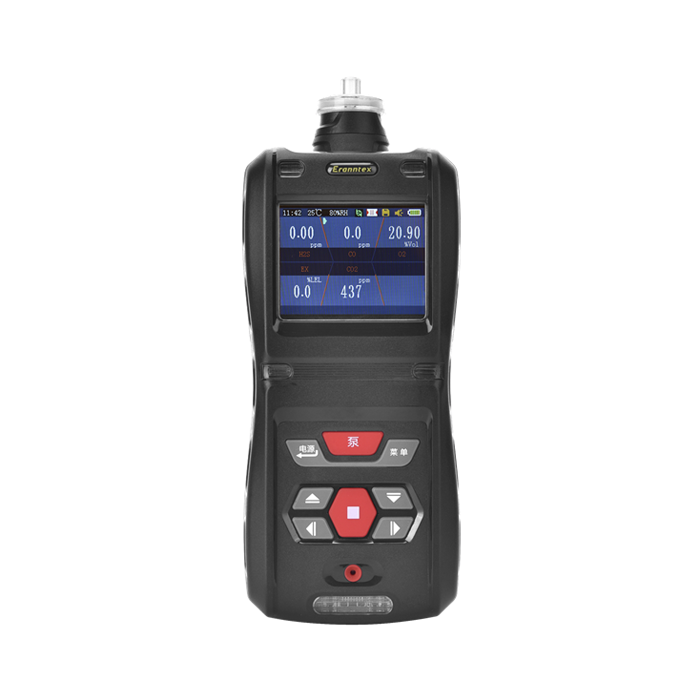
When the hydrogen detector reads abnormally, you can quickly troubleshoot the problem from the following aspects:
1. Check Instrument Basic Status
(1) Confirm power and charge:
Check whether the hydrogen detector is properly powered on or the battery is fully charged.Insufficient battery may cause unstable readings or display failure.
(2) Check the display and indicators:
Observe whether the display of the hydrogen detector is clear, damaged or black. At the same time, pay attention to check the status of the indicator light, such as a red light means low power, and a green light means sufficient power.
(3) Check the probe and the connecting wire:
Ensure that the probe of the hydrogen detector is tightly connected without loosening or damage. Check whether the connecting wire is in good condition, without fracture or wear.
2. Calibration and Verification
(1) Zero Calibration:
Zero calibration in clean air to ensure that the hydrogen detector displays the correct zero value in a hydrogen-free environment.
(2) Span calibration:
Use a hydrogen standard gas of known concentration for range calibration to ensure that the hydrogen detector can accurately display when detecting different concentrations of hydrogen.
(3) Verify calibration results:
After the calibration is completed, use the standard gas to verify the accuracy of the reading of the hydrogen detector again.
3. Check Environmental Factors
Check whether the hydrogen detector is in a space where the ambient wind speed changes greatly, and whether the temperature and humidity in the air fluctuate greatly. These factors may affect the reading of the hydrogen detector.
(2) Gas pollution and interference:
Check whether the hydrogen detector is contaminated or disturbed by other gases. For example, high concentrations of other gases may cause abnormal readings of the hydrogen detector.
4. Troubleshooting Sensors
(1) Check the sensor status:
Observe the sensor for damage, contamination, or blockage. If necessary, clean or replace the sensor.
(2) Check the sensor sensitivity:
Long-term uncalibrated sensors may cause reduced sensitivity and affect reading accuracy. Regularly calibrate the sensor to ensure its stable performance.
5. consider equipment aging and maintenance
(1) Check the service life of the equipment:
Understand the service life of the hydrogen detector and determine whether there is any equipment aging problem. Aging equipment may cause erratic or abnormal readings.
(2) Regular maintenance and maintenance:
Make a regular maintenance plan, including cleaning the probe, replacing consumables, etc., to ensure that the hydrogen detector is in good working condition.
6. Professional Maintenance and Consulting
If you cannot solve the problem yourself, you can contact the manufacturer of the hydrogen detector or a professional maintenance organization for maintenance.
(2) Consulting Professionals:
Consult a professional technician or customer service staff for more professional advice and guidance.
To sum up, we can see that when the hydrogen detector reads abnormally, we should first check the basic state of the instrument, carry out calibration and verification, check environmental factors, troubleshoot sensor faults, consider equipment aging and maintenance, etc. If you cannot solve the problem by yourself, you can seek professional maintenance and consultation. Through these steps, abnormal readings of the hydrogen detector can be quickly checked and repaired.
Related information
-
How to Calibrate a Portable four-in-one Gas Detectors?
Portable four-in-one gas detectors are core protective equipment in the industrial safety field. However, sensors can experience z...
2026-09-18 -
What are the application scenarios for portable four-in-one gas detectors?
Portable four-in-one gas detectors typically monitor oxygen (O₂), flammable gas (LEL), carbon monoxide (CO), and hydrogen sulfide...
2026-09-16 -
Portable four-in-one Gas Detectors User Manual
The portable four-in-one gas detectors is a core piece of personal protective equipment (PPE) for ensuring the safety of personnel...
2026-09-14 -

Calibration Specifications for Ammonia gas Detectors
Calibration of ammonia gas detectors is a core step in ensuring their measurement accuracy and alarm reliability. However, ammonia...
2026-09-11 -
What is the appropriate installation height for an ammonia gas detectors?
Ammonia (NH₃) has a relative density of only 0.59, much lighter than air. This means that in the event of a leak, the gas will qu...
2026-09-09
 info@eranntexgas.com sale1@eranntexgas.com


 15914124845